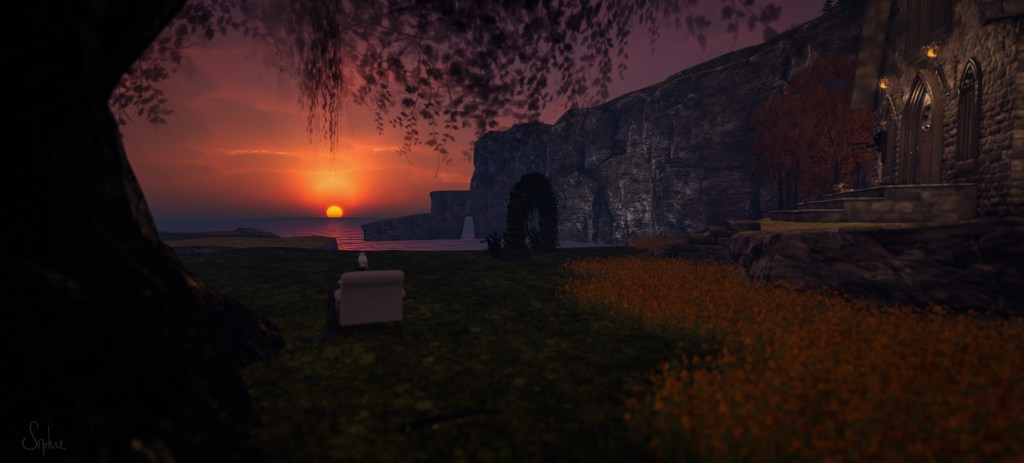
A little glimpse into something I’ve been creating. An old Gothic sanctuary, surrounded by weathered cliffs, ancient trees, and the endless sea. Still shaping the landscape, finding the light, and letting the atmosphere tell its own story.
A work in progress, but already a place to disappear for a while.
A Note on the Memoir
It’s been a little while since I’ve shared a new chapter.
I’ve continued revisiting old photographs, reflecting on the stories I’ve been writing, and discovering just how much emotion can be tied to a single memory.
Some have been wonderful to revisit. Others have been harder than I anticipated.
And lately, work has demanded more of my time and attention than I’d like.
So I’m taking a little breather from publishing chapters. I haven’t stopped writing, and I certainly haven’t run out of stories to tell.
There are parts of my life I still want to explore, including my experience with breast cancer. I’ve been thinking about writing that story for some time, but I want to give it the attention it deserves rather than squeeze it into the hours left at the end of a long day.
For now, I’m spending some of my creative time doing what I’ve always loved: building, exploring, and photographing the worlds I find myself drawn to.
I don’t know exactly when the next chapter will appear. And for once, I’m not going to give myself a deadline.
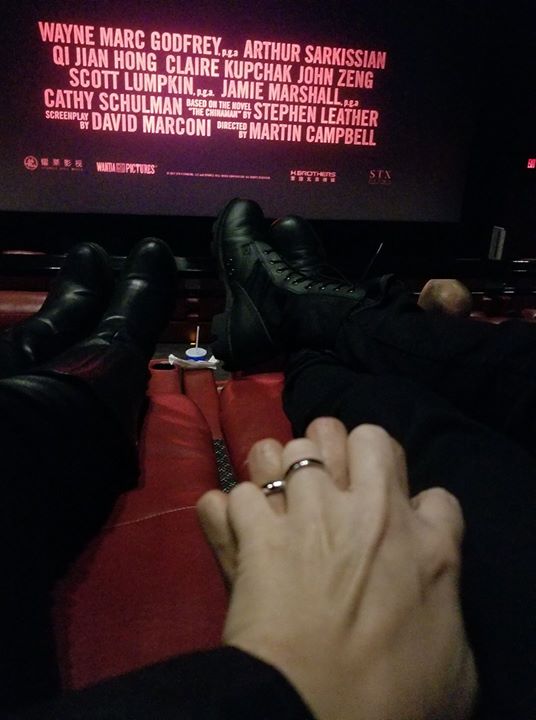
Nine years after saying ‘I do,’ I don’t simply remember the choice we made that day. I continue making it.
There is a moment in every love story that people celebrate.
The first meeting. The first kiss. The proposal. The wedding.
We remember those moments because they are easy to point to.
But they are not what sustains a marriage.
Nine years ago today, we said, “I do.”
Those words mattered.
But they were never the hardest part.
No one tells you that marriage is less often tested by extraordinary moments than by ordinary ones.
It is built in grocery stores, hospital waiting rooms, long workdays, quiet evenings, difficult conversations, and the thousand small opportunities to turn toward one another instead of away.
Love is sustained less by one extraordinary promise than thousands of ordinary decisions.
Choosing kindness when you’re tired.
Choosing patience when life is heavy.
Choosing honesty over assumption.
Choosing repair after misunderstanding.
Choosing laughter after difficult weeks.
Choosing to keep building, even when the blueprint changes.
If my younger self believed love was something you found…
My older self has learned it is something you practice.
Nine years later…I still choose you.
Not because every day is easy.
Not because every chapter has been gentle.
But because, after everything we’ve lived through, I know what love asks of us.
Autumn has always been my favorite time of year. The colors of the changing leaves. That crisp scent in the air, earth mingled with embers from bonfires. The cooler temperatures that dance on the line of perfection: comfortable in jeans and a cozy, oversized sweater.
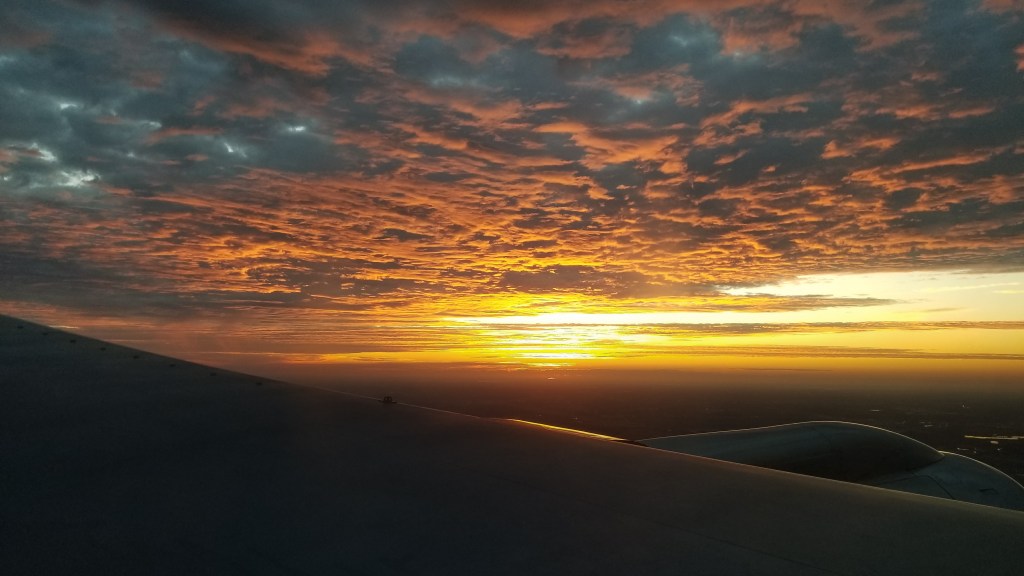
And then there is the beauty of daybreak and sunset, a backdrop to all these autumn sensations. Rays of light catch the mist lingering in the air, and dew glimmers in the morning.
Beyond its natural beauty, autumn has always been a season of change. As a child and teenager, it meant settling back into the rhythm of school and activities after summer break. As an adult, it marked the beginning of the fourth quarter: the final thirteen weeks of finishing one business plan while preparing the next.
Driving to work on those early mornings, knowing the chaos waiting for me, I found calm in watching the sun rise. After a long day, the sunset offered another moment to pause.
Other beginnings have arrived in autumn, too, unfolding more organically than the resolutions we make on New Year’s Eve. Falling in love. Moving in together. Getting married. Bringing home a new puppy.
There have been more serious changes as well, like starting daily cancer treatments. But that is a story that deserves its own breathing room.
This photograph was taken on a special day in 2017. It marked a new beginning for me and for my fiancé, who was leaving his life in another country to build a new one in the United States with me.
Months of planning, navigating government forms and interviews, and hearing a mix of support and speculation from friends had brought us to this moment: leaving his home country together to begin our life in mine.
The memory of that day remains vivid. This photograph reminds me that a sunrise holds more than the promise of a new day. It reminds me that we can choose new beginnings at any time.
But what better time of year than autumn, and what better month than October?
Nothing collapsed the next day. The world continued without rearranging itself.
from Chapter 23.
Nothing collapsed the next day.
I was tired.
Of course I was tired. What had started around eleven the night before as a photo session had somehow ended with neither of us getting much sleep.
But when Ken messaged me, he was still Ken.
He asked if I’d slept at all. I laughed and told him not much. He admitted the same.
And then we talked about work.
About our day.
About whatever our friends were doing.
The world had not rearranged itself overnight.
There is photographic evidence of this.
By the next night, I was back out with friends.
Ken was too.
We didn’t disappear from our friends afterward.
Wain was still Wain. Arya was still Arya. There were still clubs to go to, music to hear, and people doing ridiculous things in local chat.
Ken and I went back to all of it.
Except now I knew what it felt like to be alone with him.
Something between us had changed.
Or maybe it had been there and I had simply been the last person to notice.
A message from Ken wasn’t quite the same anymore. I knew what he looked like now. I knew I was attracted to him. And after Wednesday night, pretending there was nothing between us would have been ridiculous.
But he didn’t act as though what had happened entitled him to anything more from me.
He didn’t pull away either.
He was simply Ken.
I knew intimacy could change the rules quickly.
So I waited for something to change.
Nothing did.
We talked the way we had before. Shared music. Complained about work. Joined our friends. Sometimes we stayed up too late.
Wednesday wasn’t ignored. It just wasn’t turned into something we had to immediately define.
That was new for me.
Neither of us knew where this was going. And neither of us pretended we did.
At some point, Ken said it more simply than I could.
“I like what we have. I don’t want to rush it. I just want to be here with you.”
I liked what we had too.
That was enough.
We weren’t pretending Wednesday hadn’t happened.
We weren’t pretending we were only friends anymore either.
Fun – friends – shenanigans. That was exactly what the night had been.
Until it wasn’t.
from Chapter 22.
The night before, we had exchanged real-life photographs.
Sending mine hadn’t felt flirtatious. By then Ken knew a great deal about me, and sharing a photograph felt like another way of saying, This is me. This is the real person behind Sophie.
I wasn’t wondering whether he would find me attractive. The truth is, it never occurred to me that he would.
Too many years of being hurt had changed the way I saw myself. Whatever other people may have seen when they looked at me, beautiful wasn’t a word I easily applied to myself.
Then Ken sent me his.
That was different.
I immediately messaged my SL sister.
He’s incredibly hot…Like model hot.
Apparently my ability to recognize attractiveness worked perfectly well in the other direction.
Even then, though, I didn’t assume anything had changed between us.
As far as I knew, Ken and I were friends.
The next night was Wednesday.
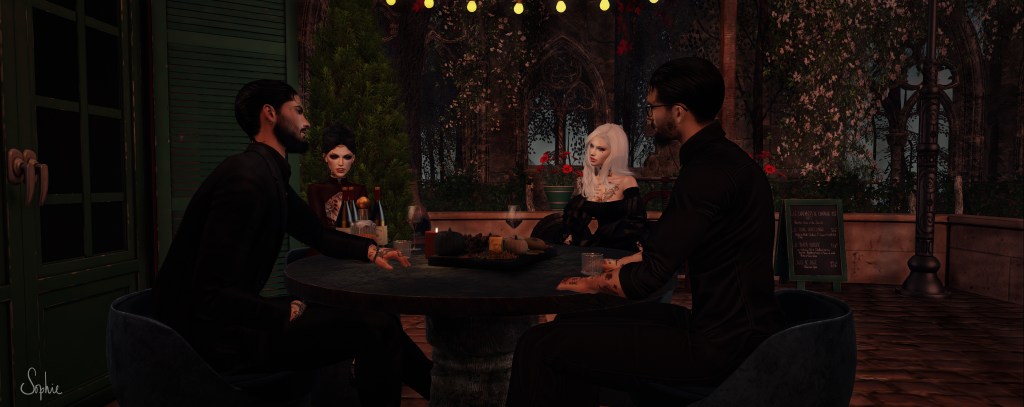
There was nothing particularly romantic about it. We were doing what we had been doing for weeks—hanging out with friends. Earlier that night, I’d posted a picture from Club Zero with Ken and another friend.
Fun – friends – shenanigans.
That was exactly what the night had been.
Until it wasn’t.
It was late, around eleven, when Ken suggested we take some pictures together. This was his idea, not mine.
I warned him that my pose inventory wasn’t exactly designed for friendship. I had couples poses. Intimate poses. Sexy poses. Apparently I had been much less diligent about collecting poses for two people who just wanted a nice picture together.
He still wanted to. So we left the group.
We moved somewhere quieter, where I could control the light. Photography was familiar territory for me, and at first that was exactly what it felt like.
We tried poses. Adjusted angles. Changed hair, then changed it back. We laughed at animations that didn’t cooperate.
The poses were closer than the ones we’d used around friends, but I’d warned him about that.
And then Ken suggested we take off our clothes.
For an artistic photo.
Of course.
I agreed.
At some point, the photographs stopped being the point.
The poses became more intimate. A hand resting somewhere it hadn’t before. Bodies angled toward one another instead of away. The kind of proximity that becomes difficult to explain as artistic experimentation once neither person is wearing clothes.
I paused.
Not because I was uncomfortable.
Because now I was aware.
“How far do you want to take this?”
“I’m enjoying this,” he said. “I didn’t expect it. It’s a surprise.”
We talked about what we were comfortable with and what we weren’t.
And then we kept going.
Afterward, we stayed. We talked.
About what had happened, yes, but also about work the next day and the increasingly obvious fact that neither of us was going to get much sleep.
Neither of us seemed particularly interested in saying goodnight.
At some point, Ken told me he was happy.
I was too.
Eventually, morning began to creep into the room.
I had to work. So did he.
This had started around eleven o’clock the night before with the perfectly reasonable idea that we would take a few pictures.
Instead, neither of us had slept.
I finally went to bed tired, happy, and more than a little surprised by what had happened.