Meaning does not arrive as interpretation. It arrives as recognition.
There is a moment that happens quietly. So quietly you almost miss it.
Nothing changes on the surface. No declaration. No realization that feels dramatic or important. Just a subtle awareness that something familiar inside you is no longer reacting the same way.
For a long time, calm is simply experienced. It feels like relief… like space… like the absence of pressure.
But eventually something else happens.
You begin to notice what that calm is doing to you.
Your body settles faster. Your thoughts don’t race ahead searching for explanation. Silence no longer feels like something that needs to be filled.
You stop bracing without deciding to stop.
And that is when quiet begins to mean something.
Not because the moment itself changed — but because you did.
Meaning does not arrive as interpretation. It arrives as recognition.
Recognition that safety is not temporary. Recognition that presence does not require effort. Recognition that connection can exist without urgency shaping it.
At first, this awareness feels fragile. You don’t want to disturb it by naming it too quickly.
So you observe.
You notice how different it feels to exist without managing emotional temperature. Without scanning for the shift that always used to come next. Without preparing to explain yourself before anything has even happened.
Nothing is being asked of you.
And that absence — once unfamiliar — begins to feel natural.
This is the point where calm stops being relief… and starts becoming meaning.
Not meaning about the other person. Not meaning about the future.
Meaning about yourself.
About what your nervous system now recognizes as safe. About what your body no longer mistakes for danger. About the kind of presence you can remain inside without disappearing.
It is a quiet shift. Almost invisible from the outside.
But internally… it changes everything.
Because once calm has meaning, you no longer experience it accidentally.
You begin to recognize it. Protect it. Choose it.
And choice is where everything that follows begins.
Some forms of staying happen quietly, without asking to be seen.
There was a time when staying felt like effort. Like something that had to be justified, negotiated, or constantly reinforced.
I didn’t know how to remain without performing. Didn’t know how to exist in connection without checking for shifts in tone or meaning. I believed presence required proof.
What I am learning now is that staying does not announce itself. It doesn’t arrive with declarations or momentum. It shows up quietly, again and again, without asking to be witnessed.
Some forms of connection are not built through intensity. They are built through repetition. Through showing up without insistence. Through letting moments end cleanly, without rushing to extend them.
I used to mistake calm for absence. Silence for disinterest. Space for something unfinished.
Now I recognize a different truth: staying is not something you force. It’s something that happens when nothing is pulling you away.
There is a steadiness in this kind of presence. A rhythm that does not spike or collapse. A sense of being held – not by promises, but by consistency.
Nothing needs to be secured here. Nothing needs to be clarified before it can exist.
Staying, I’ve learned, is not about holding on. It’s about not leaving yourself in order to remain.
And when staying no longer feels like effort, you begin to understand you’re finally where you are meant to be.
This week I also shared a more personal piece on the blog about my grandmother and the kitchen where I first learned to bake. If you missed it, you can read it here: The First Cookie.
How my grandmother’s kitchen became the quiet center of my childhood world.
As the anniversary of my mother’s passing approaches this week, I’ve been reflecting on family, memory, and the people who quietly shape who we become.
Grief has a way of resurfacing older memories, and for me it often leads back to my grandmother — the person who created a small pocket of steadiness in an otherwise complicated childhood.
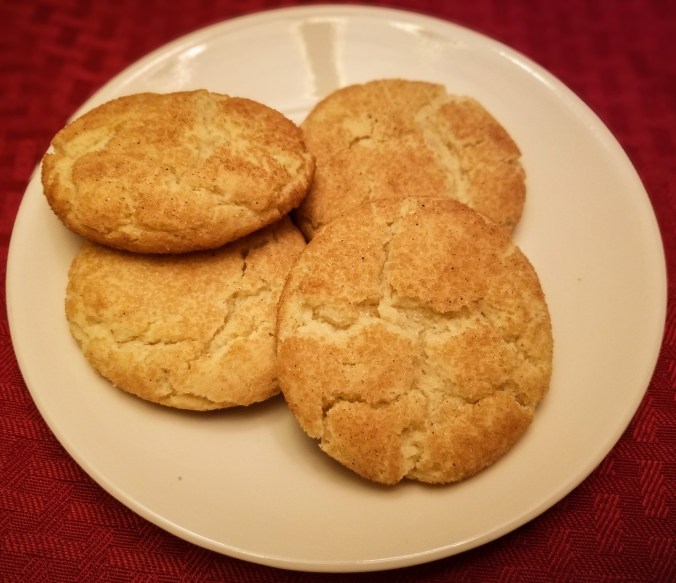
This week’s post is about her kitchen, a WWII-era cookbook, and the simple ritual of baking sugar cookies that continues to connect generations of women in my family.
My grandmother’s kitchen always smelled the same – Palmolive dish soap at the sink, Pine-Sol on the floors, and something baking in the oven.
For most of my childhood, her kitchen was the safest place I knew.
While my parents’ relationship was often chaotic and painful, my grandmother’s home was steady. The kitchen was the heart of it all. She was almost always cooking or baking, and from the time I was very small she let me help.
My first real job in that kitchen was making sugar cookies.
The recipe came from her old cookbook published during World War II, adapted from my German great-grandmother’s version. The dough was stiff and difficult for a little girl’s arms. I remember struggling to cream the butter, sugar, and eggs together with a wooden spoon before adding the dry ingredients and forming the dough.
My grandmother was endlessly patient.
She loved that I was a child full of energy and curiosity, but when given a task I could become completely focused. She never rushed me. She simply stood nearby, quietly encouraging me as I learned.
Once the dough came together, we rolled it out carefully to just the right thickness. Then came my favorite part: choosing from her drawer of cookie cutters.
They had been collected over decades – some stainless steel, some tin, some copper – shapes that likely dated back to the years after World War II. We pressed them into the dough and laid the cookies onto baking sheets before sliding them into the oven.
When the first tray came out, we let the cookies cool on racks or plates. Sometimes she would let me taste one right away, especially from the first batch.
And we rarely baked just one batch.
Often we made dozens – cookies to give away, to share with neighbors, or to donate to the women’s group at church. Baking in her kitchen was never just about dessert.
It was about generosity.
In the fall we visited the apple orchard and brought home a bushel of apples for applesauce. In the summer she grew enormous beefsteak tomatoes in a garden she had tended for years.
Her kitchen was a place where things were made, cared for, and shared.
Looking back now, I realize that many people have someone like that in their childhood – a person whose home becomes a refuge from the rest of the world. For me it was my grandmother’s kitchen. It was the place where life felt predictable and kind, where small tasks like rolling dough or measuring flour carried a quiet sense of purpose.
At the time I didn’t understand how rare that steadiness was. I only knew that when I was there, the world seemed to make sense.
When my grandmother died in 1987 after a long and difficult medical ordeal, the center of my childhood disappeared. The family that had once revolved around her slowly came apart.
Years later, I misplaced her cookbook and feared the recipe might be lost. Eventually I found the exact same edition online; the same World War II version she had used at her kitchen counter, and bought it immediately.
Now every Christmas I bake her sugar cookies again.
As I stand in my own kitchen now, decades later, I often think about that little girl standing beside my grandmother at the counter.
The dough is still stiff. My arms still ache a little when mixing it. I still roll it to the same thickness and use cookie cutters that feel like they belong to another era.
And when the first batch comes out of the oven, I always eat the first cookie.
Even now, I cannot bake those sugar cookies without thinking of her.
Usually I’m alone in the kitchen when I bake, but it never really feels that way.
I think about my grandmother’s hands — the way she hugged me, holding on longer than most people do and gently patting my back.
She had a way of making ordinary moments feel steady and safe.
Someday I hope my granddaughters will stand beside me in the kitchen the way I once stood beside her, struggling with the wooden spoon and learning how to roll the dough just right.
And when I hand them the first cookie from the first batch, I will know something important.
The love my grandmother gave me never disappeared.
It simply found its way forward.
The hands that once held mine now live quietly in the traditions I keep.
Being still meant something was about to be lost. Silence had to be filled quickly – before it became distance, misunderstanding, or withdrawal.
Urgency used to masquerade as care. Respond quickly. Adjust constantly. Stay available. Motion became proof of connection.
But presence does not require acceleration.
After reading the earlier chapter—about first meetings that arrived without significance—I realized how deeply I had been conditioned to expect intensity as a marker of meaning. If something didn’t demand my attention, I assumed it wasn’t important. If a connection didn’t rush forward, I believed it would fade.
Now I know better.
Presence without urgency is not passive. It is deliberate.
It looks like shared space without performance. Time passing without explanation. Moments that do not need to be captured, named, or defended.
There is a quiet confidence in this kind of presence. One that doesn’t monitor reactions or anticipate outcomes. One that allows people to remain exactly where they are, without pulling or pushing them toward something else.
I no longer mistake immediacy for intimacy.
What feels steady now once would have felt dull. What feels calm once would have registered as absence. But calm is not empty—it is spacious. And in that space, connection has room to exist without pressure.
Some things unfold best when they are not hurried.
Presence does not need urgency to be real. It only needs honesty.
There was a time when I believed peace was something you stumbled into. If you were lucky. If the conditions were right. If nothing disrupted it.
I don’t believe that anymore.
Deliberate living is not passive. It is not accidental. It is not something that happens once the noise finally stops.
It is a choice.
For a long time, my life was shaped by reaction. I responded quickly. I adjusted constantly. I stayed alert, attentive, ready. Even when things looked calm from the outside, my body remained braced—waiting for the next shift, the next demand, the next disruption.
That kind of living leaves little room for intention. You are always moving, but rarely choosing.
Deliberate living arrived quietly for me. Not as a declaration, but as a series of small refusals. I stopped rushing to explain myself. I stopped filling every silence. I stopped mistaking availability for care. I began asking a different question—not what should I do next? but what actually belongs to me?
The answers were rarely dramatic.
Sometimes they looked like staying in. Sometimes like leaving early. Sometimes like sitting still without narrating the moment.
And sometimes, they looked like choosing connection without urgency.
There is a difference between being with someone because you need to be and being with someone because you want to be. One is survival. The other is presence. Deliberate living does not reject closeness—it refines it. It allows space to exist without performance. It allows intimacy without collapse.
I no longer live my life at the edge of reaction. I don’t chase moments. I don’t force meaning into motion. I let things arrive at their own pace, and I trust myself to meet them where I am—not where I think I should be.
Deliberate living is not rigid. It is not controlling. It is not a withdrawal from the world.
It is choosing your footing before you take the next step.
It is knowing when to move, and when to stay. When to speak, and when silence is enough. When connection feels grounding—and when it feels like disappearance.
This is not the loud kind of living. It does not announce itself. But it is steady.
And for the first time in a long time, that steadiness feels like home.



 Between Stillness & Storm