Nine years after saying ‘I do,’ I don’t simply remember the choice we made that day. I continue making it.
There is a moment in every love story that people celebrate.
The first meeting. The first kiss. The proposal. The wedding.
We remember those moments because they are easy to point to.
But they are not what sustains a marriage.
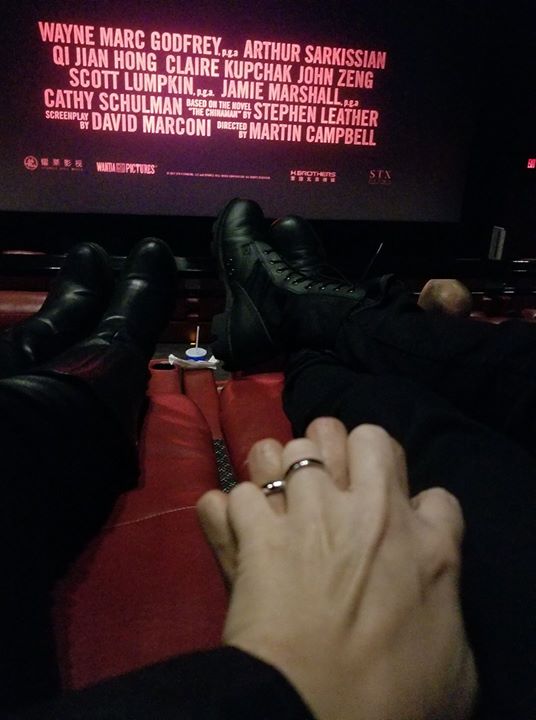
Nine years ago today, we said, “I do.”
Those words mattered.
But they were never the hardest part.
No one tells you that marriage is less often tested by extraordinary moments than by ordinary ones.
It is built in grocery stores, hospital waiting rooms, long workdays, quiet evenings, difficult conversations, and the thousand small opportunities to turn toward one another instead of away.
Love is sustained less by one extraordinary promise than thousands of ordinary decisions.
Choosing kindness when you’re tired.
Choosing patience when life is heavy.
Choosing honesty over assumption.
Choosing repair after misunderstanding.
Choosing laughter after difficult weeks.
Choosing to keep building, even when the blueprint changes.
If my younger self believed love was something you found…
My older self has learned it is something you practice.
Nine years later…I still choose you.
Not because every day is easy.
Not because every chapter has been gentle.
But because, after everything we’ve lived through, I know what love asks of us.
Autumn has always been my favorite time of year. The colors of the changing leaves. That crisp scent in the air, earth mingled with embers from bonfires. The cooler temperatures that dance on the line of perfection: comfortable in jeans and a cozy, oversized sweater.
And then there is the beauty of daybreak and sunset, a backdrop to all these autumn sensations. Rays of light catch the mist lingering in the air, and dew glimmers in the morning.
Beyond its natural beauty, autumn has always been a season of change. As a child and teenager, it meant settling back into the rhythm of school and activities after summer break. As an adult, it marked the beginning of the fourth quarter: the final thirteen weeks of finishing one business plan while preparing the next.
Driving to work on those early mornings, knowing the chaos waiting for me, I found calm in watching the sun rise. After a long day, the sunset offered another moment to pause.
Other beginnings have arrived in autumn, too, unfolding more organically than the resolutions we make on New Year’s Eve. Falling in love. Moving in together. Getting married. Bringing home a new puppy.
There have been more serious changes as well, like starting daily cancer treatments. But that is a story that deserves its own breathing room.
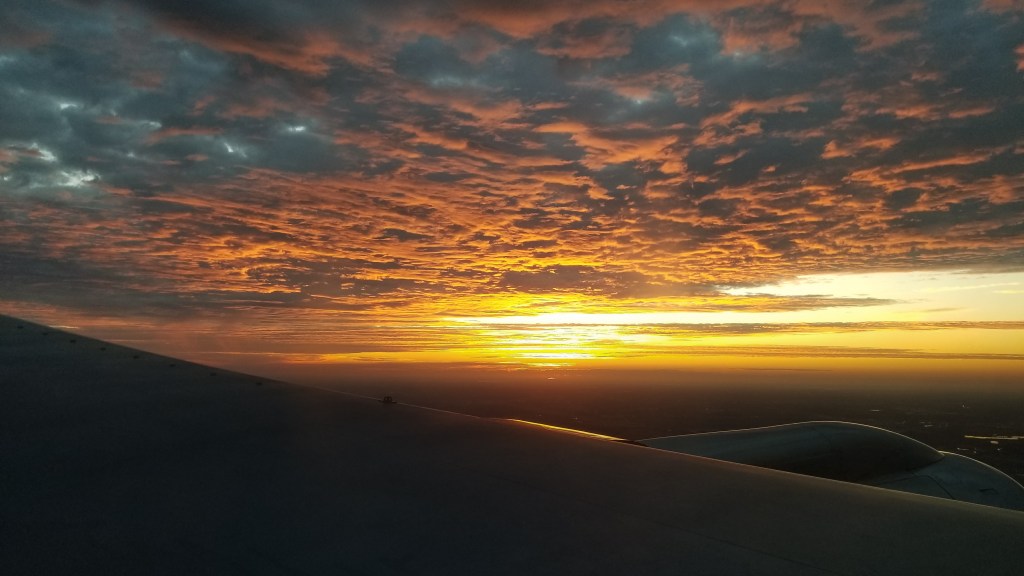
This photograph was taken on a special day in 2017. It marked a new beginning for me and for my fiancé, who was leaving his life in another country to build a new one in the United States with me.
Months of planning, navigating government forms and interviews, and hearing a mix of support and speculation from friends had brought us to this moment: leaving his home country together to begin our life in mine.
The memory of that day remains vivid. This photograph reminds me that a sunrise holds more than the promise of a new day. It reminds me that we can choose new beginnings at any time.
But what better time of year than autumn, and what better month than October?
Some silences are taken from you. Some you choose. They do not feel the same.
There is a difference between silence imposed and silence chosen. I had lived inside the first kind for over a year. I thought I understood what quiet cost.
I did not yet understand what it cost to choose it yourself.
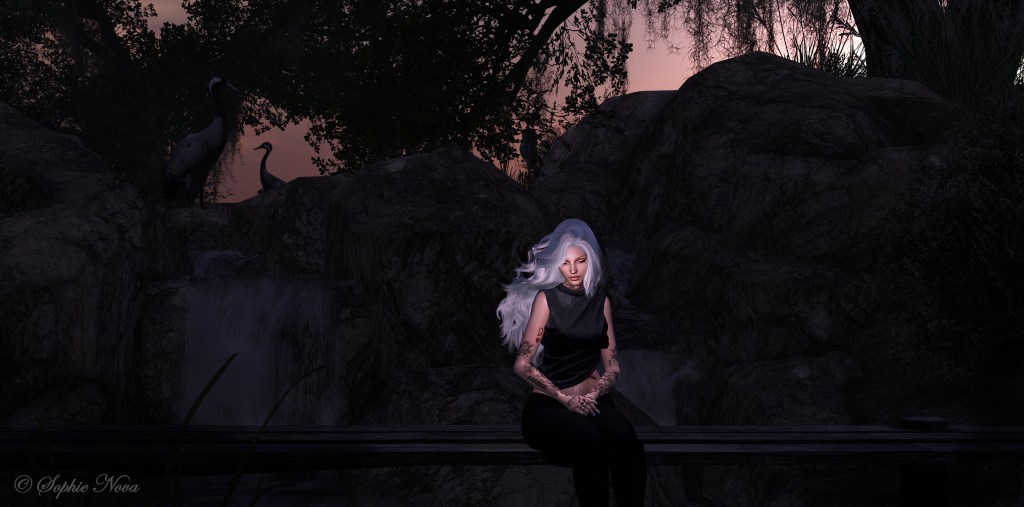
When I logged off on September 1, 2015, I told myself it was recognition. That I had seen the pattern repeat inside Sophie and caught it faster than before. That this was progress. That walking away was the right and healthy thing to do.
What I felt was not progress.
What I felt was grief. And underneath the grief, something colder — a verdict I had been building against myself for years and had finally stopped arguing with.
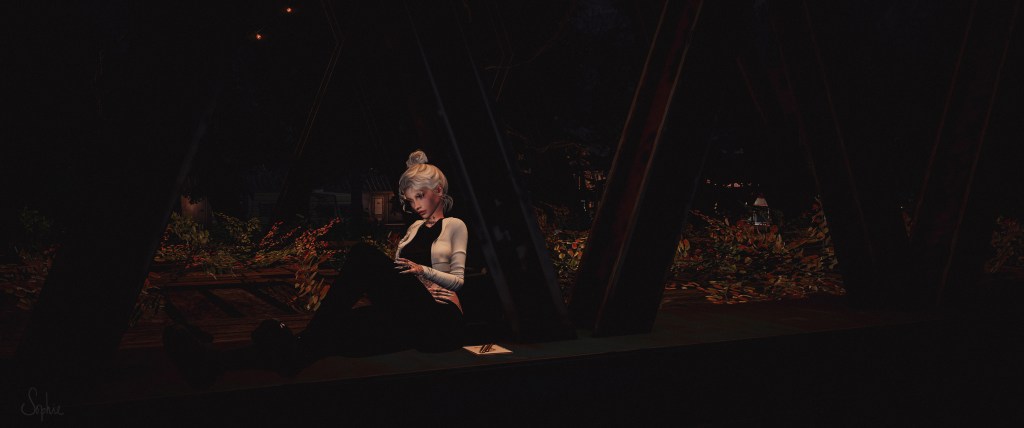
I had come out of one relationship that rearranged my nervous system. I had walked directly into another that did the same thing and worse. I had survived that one, barely, through a restraining order and the slow agonizing work of blocking every surface of my life against someone who treated a court order as an inconvenience. And then I had built Sophie — a new name, a new face, a new world he could not enter — and I had been so certain that this time the story would go differently.
It didn’t.
Different person. Different world. Same pull toward complexity. Same mistaking of difficulty for depth. Same ending — abrupt, painful, the particular hollow feeling of having been lied to and gaslit and left.
I sat with that for a long time after September 1.
Not heroically. Not with the clean clarity of someone who has learned something and is ready to move forward. Just sitting with it the way you sit with something that confirms what you feared was true — quietly, without fighting it, because fighting it had started to feel like more effort than it was worth.
Something must be broken in me.
That was the thought. Not a passing one. A settled one. The kind that doesn’t announce itself dramatically but simply takes up residence, the way certain beliefs do when they have enough evidence behind them and you have run out of arguments against them.
I thought about my father.
He had not remarried after my parents split. He had dated twice, briefly, and then he had stopped. Not bitterly — he was not a bitter man. Just quietly. As if he had done the math and arrived at a conclusion he could live with. Alone was something he understood. Alone was manageable. Alone did not require the particular kind of hope that kept getting disproven.
I understood that for the first time on September 1, 2015.
Not as resignation exactly. As recognition. Maybe some people are built for this. Maybe the pattern I kept repeating wasn’t a problem to be solved but a fact to be accepted. Maybe the kindest thing I could do — for myself, for anyone who might get close to me — was to stop trying.
I had wasted so much time.
That was the other thing underneath the grief. Not just the relationships but the years. The Wisconsin years. The Sophie year. The decade of creative work I had left behind to have silence. The teenagers I had not been fully present for because I was managing someone else’s volatility inside the house that was supposed to be their safe place.
You cannot get time back. You can only decide what to do with what remains.
What I decided, on September 1, 2015, was that what remained should be spent alone. Quietly. Without the particular kind of hope that had kept getting disproven.
I thought that was wisdom.
It was actually the deepest version of the lie I had been told about myself for years — that the damage was mine, that the pattern was mine, that something in me called these things toward me and kept them there.
I didn’t know that yet.
What I knew was that I was tired. And that the silence I had chosen, unlike the one imposed by law, felt like it might actually hold.
It might have.
But a friend would not let me disappear quietly.
And everything that came after — the return, the introduction, the slow arrival of something I had stopped believing existed — began not with my own courage or clarity.
It began with someone who saw me choosing to disappear and said: not yet.