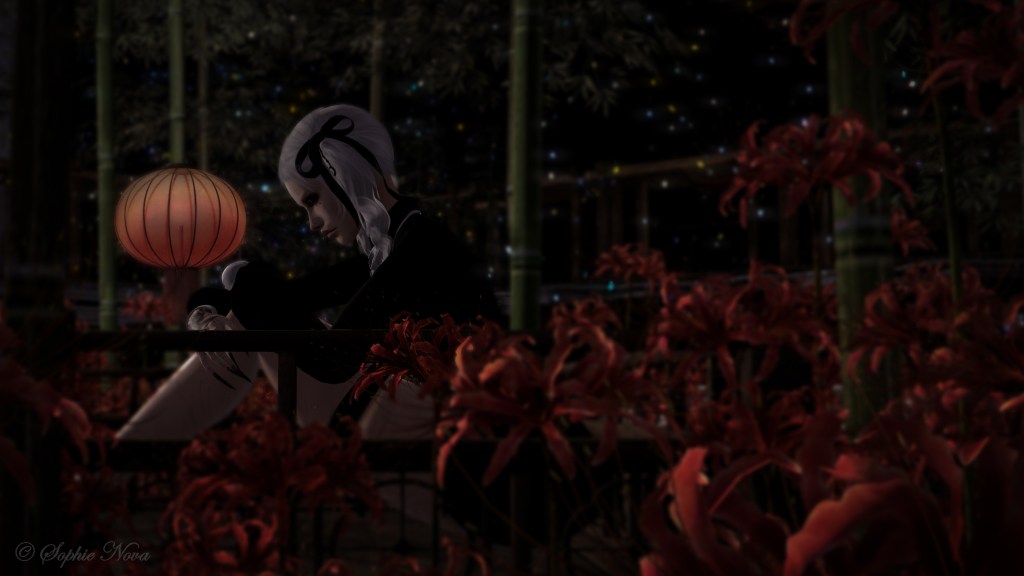
After Fire


Some warmth you accept not because it’s safe — but because the cold was worse.

When it returned, I didn’t ask what had happened.

I didn’t ask because I already knew the answer wouldn’t matter. What mattered was that it had returned. “That the silence was over. That I was no longer alone inside the absence of it.

That is the thing no one tells you about fire.

It isn’t always about the heat.

Sometimes it’s about what you were standing in before it arrived.

I had survived being abandoned once. I had learned the shape of that particular silence — the way it settles into the body, the way it confirms every quiet fear you’ve ever had about your own worth.

That lesson did not begin with him. It began earlier — quietly, thoroughly — in the way certain childhoods teach you to read your own worth through someone else’s disappointment.

By the time he left without explanation, without repair, without a single word — my nervous system didn’t reach for anger.

It reached for evidence.

And the evidence it found was familiar.

Something I did. Something I said. Something I was, or wasn’t, or couldn’t manage to become in time.

The leaving felt like confirmation.

So when it came back — the proposal, the reset, the return as if nothing had fractured — I said yes before I could think clearly about what I was saying yes to.

Not because I trusted it. Not because it felt right.

But because yes felt like a stay of execution on the verdict I had already begun to accept about myself.

This is what no one tells you about the moments after fire.

You’re not just afraid of being cold again. You’re afraid that the cold is what you deserve.

That warmth — even unstable, even conditional, even offered without accountability — feels like being chosen.

And being chosen felt like proof that the verdict was wrong.

It wasn’t proof. It was just heat.

But I didn’t know the difference yet.

And I was so tired of believing I was the reason people left.


Familiar Fire


After frost, fire feels merciful.

from Chapter 9.


I believed I was finished — with volatility, with emotional negotiation, with mistaking intensity for intimacy. I had learned how to survive absence. I mistook that for wisdom.

So when connection returned in a different form — louder, faster, unmistakable — I did not recognize it as danger. I recognized it as life.

That is how The Counterpart entered my world.

If The Listener was absence wielded as control, The Counterpart was ignition offered as proof. Where The Listener withdrew, The Counterpart surged. Where silence once punished me, sound now claimed me. His feelings arrived without delay or filter, filling every space immediately. There was no ambiguity. No waiting. No wondering where I stood.

After frost, fire feels merciful.

He spoke in absolutes. He did not ration affection — he flooded me with it. In public spaces, in profiles, in messages meant to be seen, he named me as singular and central.

Commitment arrived before understanding.

When the proposal came, it did not ask whether I was ready. It assumed readiness was proof of love.

In Second Life, partnership is ceremonial — public, declarative, symbolic. It signals belonging. The language was total. Ownership disguised as devotion. I remember feeling swept forward not because I had decided, but because stopping would have required interrupting his emotional momentum — and I had already learned what interruption cost.

So I said yes.

I told myself this was honesty. I told myself this was safety.

After months of being made to doubt my place, certainty was intoxicating.

But certainty, too, can become a demand.

Emotions escalated without warning. Connection moved from warmth to emergency in seconds. Everything mattered immediately. Everything required response. Everything was framed as evidence of devotion.

And then, without discussion, it ended.

A system message. Impersonal. Final. No explanation attached. No space for response.

Less than a day later, the system spoke again.

A new proposal. No repair. No reckoning. No acknowledgment of what had just happened.

Just a reset.

This was the moment the fire changed.

Intensity becomes dangerous when it is no longer an expression of feeling, but a mechanism of control. When commitment is used not to create safety, but to destabilize it. When love is offered, revoked, and reoffered without repair.

The breakup was not the injury. The re-proposal was.

Because it taught me that connection could disappear without warning — and return just as easily — as long as I agreed not to ask what had happened in between.

From that point forward, stability depended on my willingness to absorb rupture quietly.

That is when intensity crossed into threat.


What Remains After


It ended quietly—long after it was already gone.

from Chapter 8.


And I did not yet understand that the absence I feared had already happened.

The connection I was protecting no longer existed—it had been replaced by control, volatility, and conditional affection.

By then, reality intruded in ways I could no longer reinterpret. He told me he was getting married—on my birthday. Months later, he asked me to help plan his honeymoon. Each disclosure required a new kind of accommodation, a deeper willingness to stay present in a story where I no longer had a role.

But the date that finally lodged in my body was September 27, 2008.

The day he chose to marry was also our Second Life anniversary.

That alignment stripped the illusion clean. Whatever I believed we were could not survive in the same moment as that truth. We were no longer in the same world.

We had not been for some time.

When it ended, it was not dramatic.
It was quiet.
A release rather than a rupture.

I told myself I was finished—with virtual relationships, with emotional volatility, with mistaking intensity for intimacy.

I dated carefully. Lightly. People who asked little and offered less. I believed distance was safety.

What I did not realize was that I was not healed—only unguarded in a different way.

I had learned how to endure absence.
I had not yet learned how to recognize escalation.

And so when connection returned in a new form—louder, faster, unmistakable—I mistook the heat for life.

That is where the next story begins.


What is Absence


Absence doesn’t begin with leaving.


There’s a kind of absence that doesn’t announce itself.

It doesn’t arrive as silence, or distance, or something clearly broken.
It exists inside what still looks like connection.

At first, it feels neutral. A gap. A pause. Something temporary and easily explained.
Still speaking, still responding in all the ways that once felt natural.

At first, being present felt like a choice.
Something I offered freely.
Something that reflected how much I cared.

But slowly, that changed.

It wasn’t enough to be there.
I had to be there consistently.
Predictably.
In the right way.

If I logged in late, it was noticed.
If I left early, it lingered.
If I missed a night, it carried weight.

Nothing was said directly.
Nothing had to be.

I began to adjust without being asked.

I stayed longer than I intended.
Logged in when I was tired.
Reordered pieces of my life to make space for something that no longer felt entirely voluntary.

At the time, I told myself this was care.

That showing up mattered.
That consistency was love.

But meaning has a way of attaching itself quietly.

Not all at once. Not in ways you can point to or name.
Just a subtle shift in how something feels when it isn’t there.

Care became something I demonstrated.
Presence became something I proved.

And what had once been freely given
began to feel quietly measured.

A presence that used to be consistent, now slightly out of reach.
A silence that lingers a little longer than expected.

And somewhere in that shift, absence stops being empty.

At the time, I didn’t recognize it as loss. Loss, in my mind, required something visible—an ending, a decision, a moment you could point to and say: this is where it changed.

But that isn’t always how it happens.

Sometimes loss begins in the space between what is still happening and what is no longer being felt.

A tone that doesn’t land the same way.
A presence that feels thinner, even when it hasn’t disappeared.

And because nothing has ended, you stay.

You adjust.
You compensate.
You try not to look too closely at what feels different.

You tell yourself it’s temporary.
Or imagined.
Or something that will return if you give it enough time.

But there’s a part of you that already knows.

Not loudly.
Not urgently.

Just quietly enough to be ignored.

Until it isn’t.

Because absence doesn’t need an ending to be real.

Sometimes it’s the beginning of one.