From Chapter 14.
For a long time, I believed movement was survival.
Staying busy meant staying safe. Responding quickly meant staying connected. Adjusting meant staying loved.
I had learned to live inside urgency so completely that stillness felt like risk. Even after the restraining order, even after the violence had been named, my body still expected demand.
It took time to understand that safety does not announce itself.
It arrives quietly… and often feels wrong at first.
There was no moment where I declared myself healed. No ceremony marking the return of autonomy. What changed instead was subtle. I began to notice pauses where I once rushed. Spaces where I no longer filled the silence. Invitations I declined without explanation. Messages I did not answer immediately – not as punishment, not as strategy, but because I no longer felt compelled to.
Choice returned in small increments.
In Second Life, I logged in without expectation. I showed up to host shifts, greeted familiar names, danced without watching who watched me back. Music washed over me without becoming a signal. Touch remained virtual, but it no longer carried urgency.
I was present without being exposed.
At first, this felt uncomfortable. Almost irresponsible. I had been trained to believe that love required responsiveness, that care meant availability, that rest was something you earned only after everyone else was settled. Now… there was no one to manage. No volatility to stabilize. No emotional weather system demanding my attention.
Without urgency, I felt exposed.
But exposure was not the same as danger.
I began paying attention to my body in ways I never had before—not to monitor threat, but to register truth. Tightness. Ease. Curiosity. Aversion. I noticed how certain voices, certain styles of attention, still triggered a familiar pull. The instinct to soothe. To explain. To prove.
And I noticed something else, too: how quickly that pull faded when I didn’t follow it.
Intensity, once magnetic, now registered as noise. The sharp edge of charm felt less like excitement and more like pressure. I had learned, finally, that attraction does not have to feel like acceleration. That calm is not the absence of chemistry. It is the presence of safety.
Being alone was not the hardest part.
The hardest part was not performing.
There were evenings when I logged off early simply because I was tired—not emotionally depleted, not overwhelmed, just human-tired. I slept deeply then, dreams unremarkable, uncharged.
Healing, I learned, is not a revelation.
It is repetition.
The body relearns safety through ordinary moments. Through calm that does not spike. Through the sustained absence of threat. Slowly, my instincts recalibrated. What once felt exciting now felt loud. What once felt romantic now felt rushed. I began to trust discomfort again—not as something to override, but as information. I stopped confusing intensity with intimacy.
There was no one to impress. No one to convince. No one whose mood determined the temperature of my day. I was no longer required to be useful in order to belong.
And without that requirement, I faced a quieter question:
Who am I when no one is asking anything of me?
I rebuilt my life deliberately small.
I kept my routines simple. I chose predictability over novelty. I surrounded myself with people who did not demand access to my inner world in exchange for connection. I laughed without scanning the room. I slept without listening for footsteps. I allowed myself to be unremarkable.
That, too, was unfamiliar.
For years, love had been something I survived—something I endured, managed, negotiated. I had mistaken intensity for depth, proximity for intimacy, endurance for devotion. Without realizing it at first, I was learning something else entirely.
Love – real love – does not require collapse.
It does not ask you to disappear to prove you care.
It does not demand urgency to feel alive.
It does not punish pause.
Loneliness still surfaced at times, sharp and unexpected. But it no longer frightened me. I had learned the difference between being alone and being erased. One is a condition. The other is a wound.
I chose solitude over repetition.
I chose quiet over explanation.
I chose to stay inside my own life, even when it felt unfamiliar, even when it felt empty, even when part of me still believed that love was supposed to arrive with force.
What I did not know yet, what I could not have planned for, was that something entirely different becomes possible once urgency releases its grip.
Not because you are searching.
But because you are no longer willing to disappear.
And that is when choice stops being theoretical.
It becomes lived.
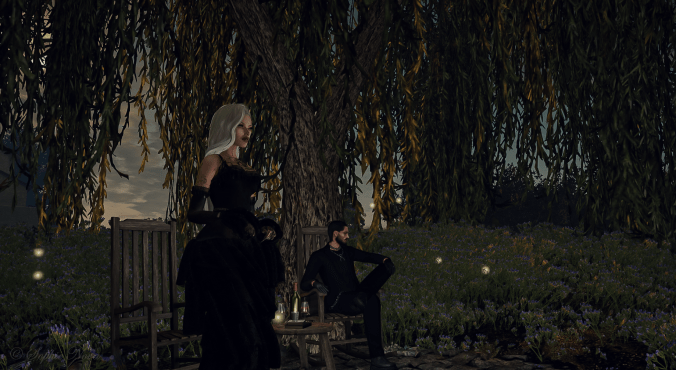
 Between Stillness & Storm