Years spent preventing explosions and never once calling for help. That training ended one morning behind a locked door in Wisconsin.
I had never called 911 before.
That sounds like a small thing. It isn’t. There is a particular kind of person — built by certain childhoods, certain relationships, certain years of believing that managing things alone is the only responsible option — for whom dialing those three numbers feels like a confession of failure rather than an act of survival.
I was that person.
I had spent years preventing explosions. Absorbing impact. Recalibrating after each rupture and preparing for the next one. I had built an entire internal architecture around the belief that if I just stayed steady enough, smart enough, careful enough — I could keep things from reaching a point where outside help was necessary.
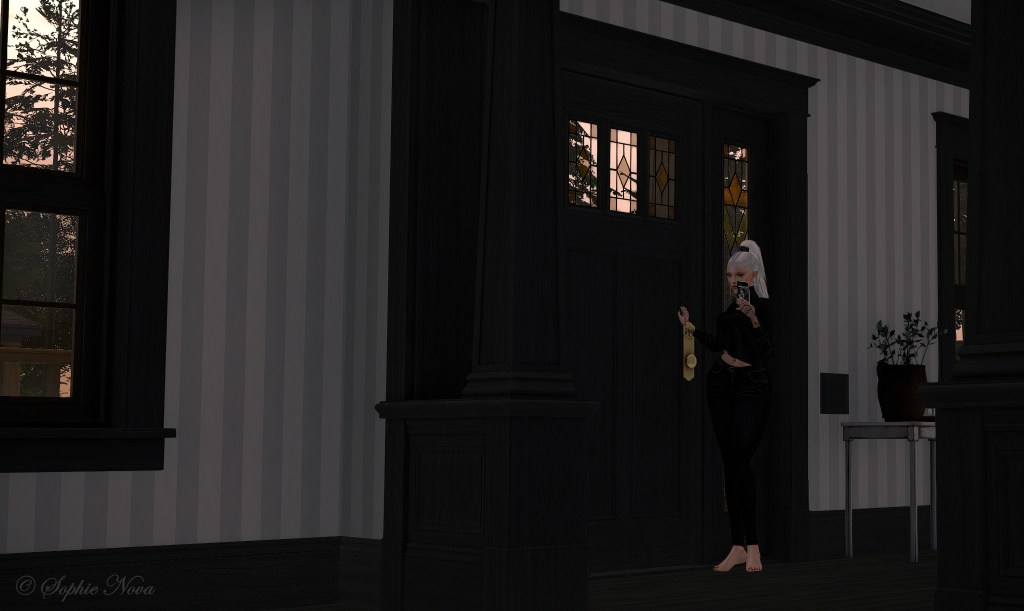
Standing behind a locked door in suburban Wisconsin, I dialed anyway.
The lump in my throat was physical. The kind of tension that sits just below the jaw and makes it hard to speak clearly. I remember the dispatcher’s voice — steady, professional, unhurried — asking me to explain the situation. And I remember trying to find words while on the other side of the door he was announcing each step.
That is the detail that stays with me. Not the shouting. Not the impact against the door. But the announcing. Each thing he was going to do, named in advance, as if the declaration itself was part of the violence.
And against that — the dispatcher. Calm. Present. Are you safe? Police are on the way. Stay on the line.
Push and pull. Fear and adrenaline and tension and the strange thin thread of relief that someone on the other end of a phone was telling me help was coming.
I was calculating in real time. The emotions came later. In that moment I was running the numbers: what this call meant for him, for us, for my sons, who were hearing things no child should hear. There was no version of my life that remained unchanged after this.
There was no coming back from this call.
I knew that before the police arrived.
And then he shouted through the door that I should give him his gun. So he could shoot the police.
That sentence is the one that dissolved the last fragment of ambiguity I had been carrying. Not just danger. Announced danger. Specific, named, directed at people who were coming to help me because I had finally asked.
I stayed on the line.
The police arrived. The chaos stopped with a speed that was almost surreal — as if violence had an off switch that only certain authorities could reach. And in the silence that followed I understood something I had not fully understood before: I had asked for help, and help had come.
That sounds simple. It was not simple. For someone who had spent years believing that asking was weakness, that managing alone was the only acceptable option, that the cost of involving others was too high — the arrival of those officers was not just rescue. It was revision. Of everything I had believed about what I was allowed to need.
I went to the police station later to turn in his gun and make my formal statement.
Sitting across from the officer, speaking plainly about what had happened, I felt the weight of it arrive in full. Not during the crisis — during the crisis the body runs on adrenaline and calculation. But in that room, with someone writing down my words and treating them as evidence of something real, the gravity of it sank in completely.
He told me I was a survivor of domestic violence.
I had never used that word for myself.
He said it plainly, without ceremony, the way you say something that is simply true. And I sat with it — the word, the weight of it, the years it contained — and understood that asking for help had not been failure.
It had been the first decision I had made entirely for myself in a very long time.