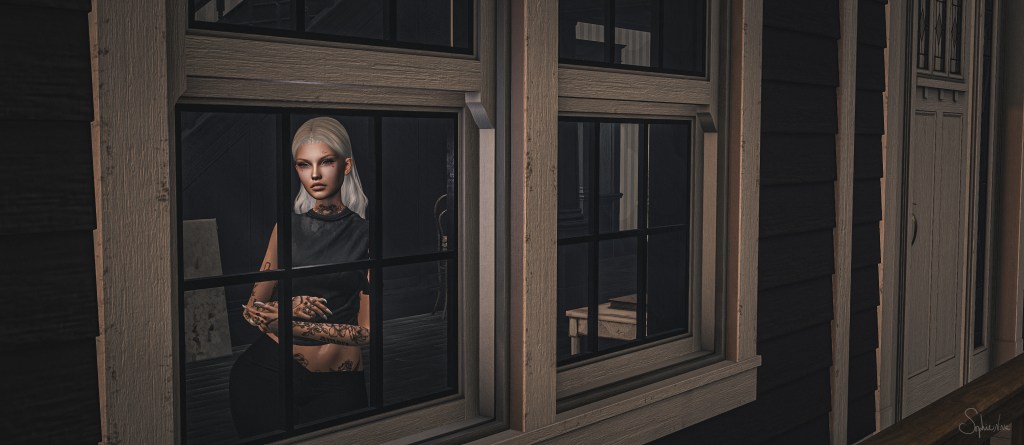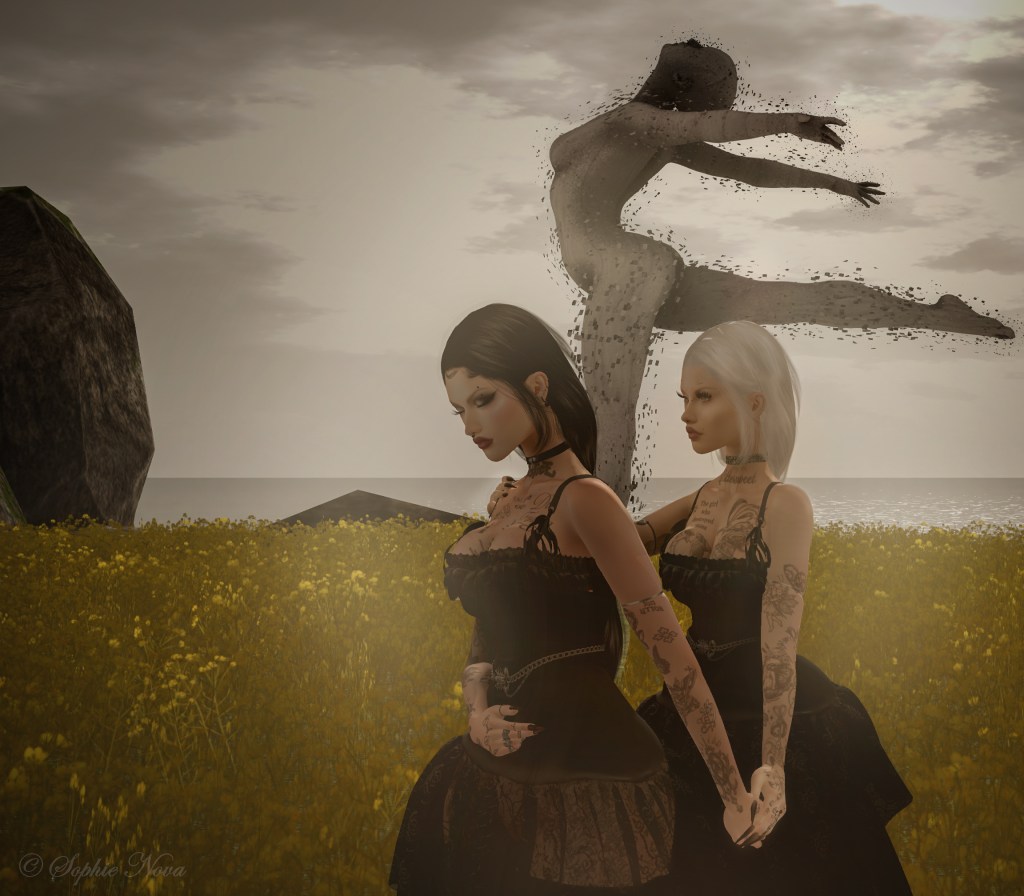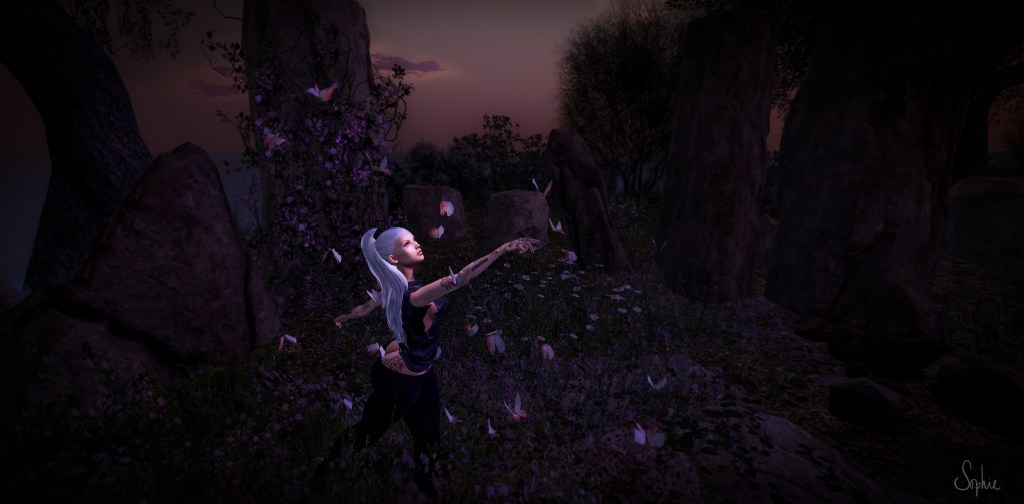
The Morning it Ended

This post discusses domestic violence. Please take care as you read.


I did not feel brave. I felt resolved.

from Chapter 14.


There are moments that divide a life cleanly into before and after.

They do not always arrive with warning. Sometimes they come disguised as arguments you have survived before, raised voices you have learned to endure, tension you believe you can de-escalate if you say the right thing in the right tone.

The morning it ended did not begin as an emergency. That is what made it dangerous.

There was no shouting at first. No crash, no rupture, no obvious moment that demanded intervention. Just the familiar tension in the air — the kind I had learned to read instantly. The way my body tightened before my mind could assemble a story. I was already managing.

Nothing about it announced itself as the day everything would change. It felt like another escalation in a pattern I had grown accustomed to managing.

Until it wasn’t.

The argument accelerated the way they always did. Words stacked on words. Frustration feeding itself. I tried what I had always tried — reason, calm, grounding. I slowed my voice. I chose my words carefully. I gave space.

None of it worked.

What shifted first was not fear, but clarity.

There was a moment when his anger stopped feeling emotional and began to feel physical — when the air in the room changed, when proximity no longer felt safe. He moved into the garage. I remember thinking, I need distance now.

I locked the door behind him.

That decision — simple, instinctive — was the moment everything crystallized. It was the first time I acknowledged, fully and without negotiation, that I was protecting myself.

On the other side of the door, the anger did not retreat. It intensified.

The sounds that followed were not shouting. They were heavier. Deliberate. Impact without words. Each strike landed not just on the door, but somewhere deeper, where understanding was forming faster than fear.

This was not frustration. This was not loss of control. This was rage choosing force.

I stood there with my phone in my hand, shaking — not because I was unsure what to do, but because I knew exactly what I had to do, and what it meant.

When I called the police, I crossed a line I had avoided my entire life.

I had been trained to endure.

Standing there, listening to the door absorb the violence meant for me, those beliefs collapsed.

I asked for help.

When he demanded his gun while I was still on the phone, the last fragments of illusion shattered completely. This was no longer about emotion, misunderstanding, or stress.

It was about survival.

The arrival of the police brought an abrupt stillness. The chaos stopped as if it had never existed. That contrast — the speed with which everything went quiet — was almost more unsettling than the violence itself.

I did not feel brave. I felt resolved.

In the aftermath, I sat alone in a silence that felt unreal. The house looked the same. Nothing appeared broken from where I stood.

But something fundamental had been destroyed.

This was not love strained by circumstance. This was not intensity mismanaged. This was danger.

The officer spoke gently, plainly. He told me this was not normal behavior. That I was a survivor of domestic violence. That I had done the right thing calling 911.

Two of my sons — teenagers — had heard what happened. I feared what they had witnessed.

They hugged me. They told me they loved me. They told me I was doing the right thing.

The restraining order that followed was not a declaration of freedom. It was an acknowledgment that this was no longer something I could handle alone.

In court, I listened as my own words were read back to me — stripped of emotion, laid out plainly. The judge did not hesitate.

What had been done was unacceptable. What had been said was abuse. What had been threatened was real.

I felt something unexpected — not triumph, not satisfaction. Relief.

Validation does not erase trauma. But it steadies you.

I cried — not for the man who had lost control, but for the version of myself who had survived so much without protection. Those tears were not weakness. They were release.

The door had shaken. But I did not break.

And for the first time in a long time, I chose myself — without apology.


The Condition


Some agreements are made in good faith. Some are made because hope is the only currency you have left.

from Chapter 13.


The conversation happened at Thanksgiving because my mother was visiting.

That detail matters more than it might seem. He had a problem with my mother. She had a problem with him. Neither of them was overt about it — they simply moved around each other carefully, two people who understood exactly what the other represented. He resented her presence. He resented what she gave me — gifts, flowers, the ordinary gestures of a mother marking her daughter’s occasions. That generosity enraged him in ways I spent years trying to understand and eventually stopped trying.

He seemed unable to tolerate anyone giving me something that existed outside his control.

My mother’s visit clarified what had been forming for months. He said we were not working. I agreed. I told him we both needed to find our own places by the end of the year. And for a moment — brief, almost peaceful — that felt like a decision we had made together. A recognition of something we had both known for a long time.

Then I found the house.

It was within my budget. It had space for my sons. It had the particular quality of a place that could become something — rooms that held potential, a yard, the feeling of permanence I had been craving since Phoenix. I made an offer before I fully thought through what it meant.

He saw it and wanted to stay together.

The condition I set was simple. He needed to find a job — not for me, but for himself. To have something that was his. To stop depending on me and his mother to sustain his life while he waited for SL to become the career he believed it would be.

I told him plainly: I cannot keep carrying this. If we are going to try again, you have to carry something too.

He agreed.

I helped him complete the Walmart application. He could not get through the questionnaire alone, so I sat with him and we worked through it together — one more act of labor I offered without naming it as such. He got the job. He was happy for exactly one week.

Then came the complaints. The hours. The people. The particular indignity of a man who believed he was meant for more, standing behind a register while his creativity went unused.

Then came the reframe, delivered with the precision I had come to recognize:

I had forced him into this.

What I had done out of care became evidence of control.

I recognized the pattern.

I stayed anyway.

The house did not stabilize us. It simply gave the instability an address.

He was off and on through that year. He would leave after fights — sometimes I asked him to go, sometimes the fight made the decision for us — and then he would return. The returns varied. Sometimes remorse. Sometimes simply the resumption of presence, as though absence had been a pause rather than a statement. Each return required recalibration. Each departure left residue.

The cycle was familiar. I had lived inside it for years.

What was different now was the house. What had once existed across screens and distance now had walls and a mortgage and my children’s bedrooms down the hall.

There was nowhere to log off.

My oldest son told me once — quietly, not as accusation but as observation — that I was never happy.

It landed like a fist.

Not because he was wrong. Because he was right. And because he had been watching long enough to know it before I could admit it myself.

I was never happy.

Not in that house. Not that year. Not in the way a person is happy when their life belongs to them.

What I had done was adapt. What he called it was betrayal.


The Illusion Breaks


I had survived so much by staying steady. Until steady was no longer enough.

from Chapter 12.


By the time the violence became undeniable, it had already been normalized.

Not all at once. Not dramatically. But incrementally — through raised voices that became slammed doors, slammed doors that became blocked exits, blocked exits that became moments where my body understood what my mind was still trying to negotiate. What had once been volatility now had mass. Weight. Consequence.

Control no longer needed explanation. It could be felt.

In virtual space, distance had acted as a buffer. Words could wound, but they dissolved into pixels. Silence could punish, but it could be escaped by logging off. Even rage, at its most explosive, remained contained within screens and speakers. I could step away. Mute. Close a window. Breathe.

I did not fully understand how much that distance had protected me until it was gone.

Meeting The Counterpart in person collapsed the last illusion I had been holding onto — that what we were navigating existed in a separate, safer category than real life. That intensity could be managed because it was mediated. That volatility could be softened by space.

It could not.

In person, his emotions moved faster. There was no delay between feeling and expression. No pause to reconsider. Anger lived in his body now, in his posture, his voice, his movements.

There was no off switch.

What I had once managed through distance now demanded response in real time. When his mood shifted, I could no longer retreat to silence or space. When tension rose, it filled the room. When fear surfaced, it clung to me physically.

I began to sense something I had not wanted to name before: his instability was not situational. It was not virtual. It was structural.

The relationship did not change when it became physical. It revealed itself.

I found myself calculating constantly, monitoring tone, anticipating reactions, measuring my words not for honesty, but for safety.

When anger appeared, it was no longer just sound. It was presence. When despair surfaced, it was no longer abstract. It was embodied — heavy, demanding.

Instead of logging off, he stood in the doorway.

And still, I told myself this was temporary. The illusion was that I could still control the outcome.

This is how illusion survives contact with reality: it adapts.

I reframed warning signs as growing pains. I interpreted fear as vulnerability. I translated control into concern. I believed closeness would fix what distance had concealed.

But proximity does not heal instability. It amplifies it.

There was a moment — quiet, unremarkable on the surface — when I realized something had fundamentally shifted. I was no longer choosing the relationship. I was managing it. I was no longer participating freely. I was mitigating outcomes.

And the cost of failure no longer felt emotional. It felt physical.

I still loved him. But I had stopped agreeing to his version of reality.

What began in a virtual world — where escape was always possible — had entered my real one, where consequences did not log off.

For the first time, the fear was no longer about loss. It was about survival.


What I Built

Photo Note: A render from 2010. By then, much of what people associated with his name already carried my fingerprints.


Some things begin as care and become invisible over time.

from Chapter 11.


I gave him space before I gave him anything else.

That is the part that becomes difficult to remember later — that it did not begin as sacrifice. It began as care. I had land in Second Life, prims to spare, enough room to build something if someone needed a place to begin. And he did.

He had the kind of talent that unsettles you a little when you first encounter it. Not polished talent. Not the kind the world rewards easily. Something rougher than that. Something instinctive. He could build things that felt like they had lived somewhere before they arrived on a screen — dark cathedrals, fractured machinery, pieces that carried atmosphere inside them.

I understood that kind of creativity immediately because I had spent years around people who carried entire worlds inside themselves and nowhere stable to place them.

So I made room for him.

The Listener had been softness — romance, fantasy, warmth carefully arranged into beauty. The Counterpart was different from the beginning. Darker. Industrial. Sharp-edged. His world was metal and shadows and neon and ruin. Vampiric things. Cyberpunk things. Places that looked abandoned and alive at the same time.

I was drawn to the contrast as much as the person.

The first sets were mine.

Small things, carefully made — silks and caps built from techniques I had spent time developing myself. Tiny prim work. Delicate alignment. The sort of detail most people never notice unless they have built something by hand before.

He took what I made and extended it.

Veils. Variations. Additional pieces that grew outward from the foundation already there. That was how we actually began creatively — not by building the same thing together from the start, but by him stepping into something I had already created and expanding it outward into his own vision.

Later, the work became more intertwined.

He imagined quickly. I refined patiently.

He would rough out the structure of an idea, texture something half-finished at three in the morning, build the atmosphere of it. I would take what he made and finish the parts no one notices until they are missing — the alignments, the scripts, the permissions, the packaging, the notecards, the listings, the advertisements, the marketplace updates after I had already worked a full day somewhere else.

He made the vision feel alive. I made the vision function.

At the time, neither of us said the distinction aloud.

We built the storefront together. Dark stone. Cathedral scale. Purple light spilling across black floors. A portal suspended above the entrance like something opening.

In the beginning, we was still an honest word.

There was excitement in it then. The particular intimacy of building something alongside someone you loved. Long nights working while music played in the background. Conversations folded between textures and scripts and half-finished ideas. The feeling that the two of you were creating not just objects, but a world.

At some point — not dramatically, not on a day I could name — the we quietly became me.

The store became a second job. His creative timeline became my deadline. If I came home exhausted and did not want to log in after work, it became part of the reason things were not succeeding the way they should. His vision remained the center of gravity. My role became sustaining it.

I do not think he saw it that way. I think, genuinely, he believed he was the one sacrificing more. My work existed in his mind differently. I was supporting the household because I had to. He was creating because it mattered.

The contradiction inside that belief never fully reached him.

In his SL profile, he described me as artist, gamer, creator, scripter, sim builder, and co-owner of the store. He saw what I was. He named it publicly, in his own words, in the space where he chose what to say about himself and the people in his life.

He knew I built things. He said so. He simply made sure the things I built carried his name.

That is not oversight. That is a choice.

I kept building anyway.

Through the Wisconsin years, through the financial architecture of a household I carried alone, through the arguments and the cycles and the moments that required swallowing — I kept making things. Collections named for goddesses, built by hand, listed under my own name on my own marketplace page. The dates are still there, stretching back through all of it.

I was making things the whole time.

That is the part of the story that belongs to me and cannot be revised. Whatever else was happening — whatever was being called mine that wasn’t, whatever of mine was being called his — I was creating. Quietly. Continuously. Under my own name.

By the time people knew the store by his name, my hands were already in its foundations.

The store that carries my name still remains.

I built both of them.


The Illusion of Control


I believed understanding the storm would protect me from it.

from Chapter 10.


By the time The Counterpart entered my real life, I believed I understood what danger looked like, because I had already survived the fire. I had survived a relationship that never left the screen but rearranged my nervous system anyway. I had learned the language — withdrawal, conditioning, intermittent reinforcement. I believed awareness was protection.

What I did not yet understand was that recognizing a pattern does not stop it from advancing. It only convinces you that you can manage it when it does.

With The Counterpart, the rules were visible — because he stated them like terms. He did not simply want closeness. He wanted me to accept the conditions under which I should feel grateful he had chosen me at all.

“You are older, you have kids from a previous, still married and you cant give me children. Put that into perspective please.”

“Secondlife will not be going as a sacrifice to being with you. Its time you either accept me or let me go.”

He did not hide his emotions. When he was angry, it arrived loudly and unmistakably. When he was loving, it was intense, consuming, immediate. I told myself this honesty meant safety.

And so I adjusted.

I learned which topics ignited him and avoided them. I learned how to phrase concerns gently enough to slip past his defenses. I learned when to engage and when to wait, when to soothe and when to stay silent. I believed that if I could just remain steady — if I could be calm enough, patient enough — I could keep us balanced.

This is the illusion of control: believing that emotional regulation can be outsourced.

I became the stabilizer. The emotional anchor. When he spiraled, I grounded him. When he raged, I took the impact. When he collapsed, I carried the weight. I mistook this labor for partnership. But managing volatility does not neutralize it. It only relocates the cost.

He insisted that if I loved him, I would come to Wisconsin. That was the only proof he would accept. Even then, love wasn’t something we shared. It was something I was required to demonstrate.

So I spent money I did not have and flew there.

The weekend was intoxicating. I returned home believing we were building toward something real.

In May 2009, after months of volatility I had come to accept as normal, I interviewed for a job in Wisconsin. He was pleased. My willingness to uproot my life was read as devotion. When I was offered the position, I resigned from my job in Arizona, found a house, and moved my family across the country.

Living together in real life collapsed the distance that had disguised so much — and protected me.

I worked to support all of us. Then I worked again at night — inside Second Life — trying to keep him steady. The cycle was relentless: I worked to provide, then worked again to appease.

I was not choosing peace. I was preventing explosions.

There is a particular exhaustion that comes from believing you are the only thing standing between calm and chaos. It creates urgency. Hyper-awareness. A sense that rest itself is dangerous, because something might happen while you are not paying attention.

I lived there.

What made the illusion convincing was that sometimes it worked. There were stretches of calm — days, even weeks — when my careful navigation seemed to stabilize things. The house felt quiet. The tension eased.

Those moments reinforced the belief that I could manage this.

But volatility does not disappear. It waits.

I began to understand — too late — that I was not preventing harm. I was postponing it.

Still, I stayed.

Because letting go of the illusion meant confronting a harder truth: that I could not love someone into safety, and that my effort — no matter how sincere — was not the solution I wanted it to be.

I had escaped silence by stepping into noise. And I was still trying to control the weather — just before the storm arrived.