What the Body Knew First


Every evening I came home was a calculation.


I had wanted a home of my own for years before I finally had one.

Not a shared home. Not a home that depended on someone else’s name or credit or willingness to stay. Mine. Bought with money I had earned, credit I had rebuilt from nothing, after years of working through the kind of damage that doesn’t announce itself all at once — a first marriage that ended in the loss of everything we had built together, a second that left my finances destroyed while I was too sick to stop it from happening.

I knew what it cost to lose a home. I knew what it took to earn one back.

So when I finally signed the papers — when the house was mine, legally and completely, rooms for my sons, a yard, the particular feeling of permanence I had been reaching toward for years — I believed it meant something. That we had arrived somewhere. That the rebuilding had worked.

What I did not expect was that I would learn to dread coming home to it.

It happened slowly. Not dramatically. Just the gradual accumulation of evenings when I sat in the parking lot at work a little longer than necessary. When I found one more task to finish before logging off. When I measured the drive home not by distance but by what might be waiting at the other end of it.

The body learns things before the mind names them. Mine had learned the temperature of the house before I opened the door. The particular quality of silence that meant something was brewing. The way a presence fills a room differently depending on what mood it carries. I had become fluent in a language I never chose to learn — reading the atmosphere of my own home the way you read weather, constantly, automatically, without deciding to.

I threw myself into work.

Not because I loved it more than my sons. Because work was the one place where I knew what I was walking into. Where the rules were legible. Where my effort produced outcomes I could predict. Where no one’s volatility was waiting behind ordinary questions.

My sons were teenagers. Navigating everything teenagers navigate — school, friends, the particular turbulence of becoming — and I was not there the way I wanted to be. Not because I had chosen work over them. Because I had chosen the office over coming home, and they happened to be at home.

That distinction matters and it also doesn’t. The result was the same.

I missed them. I missed my dog. I missed the ordinary life that should have been happening inside those walls — dinner at a reasonable hour, evenings without monitoring the atmosphere, the simple animal comfort of being in your own home without bracing.

I had rebuilt everything that could be rebuilt. Credit. Career. Stability. A house with my name on the deed.

And I was miserable inside it.

That is what the body knew before I had words for it. Not that I was in danger — not yet, not in the way that would eventually require a locked door and a phone call to the police. Just that something was wrong. That the place I had worked toward for years had become a place I calculated before entering. That home — the word, the idea, the thing I had wanted back for so long — no longer meant what it was supposed to mean.

The body keeps that accounting even when the mind is still negotiating.

It knew.

It was trying to tell me.

I just wasn’t ready to hear it yet.
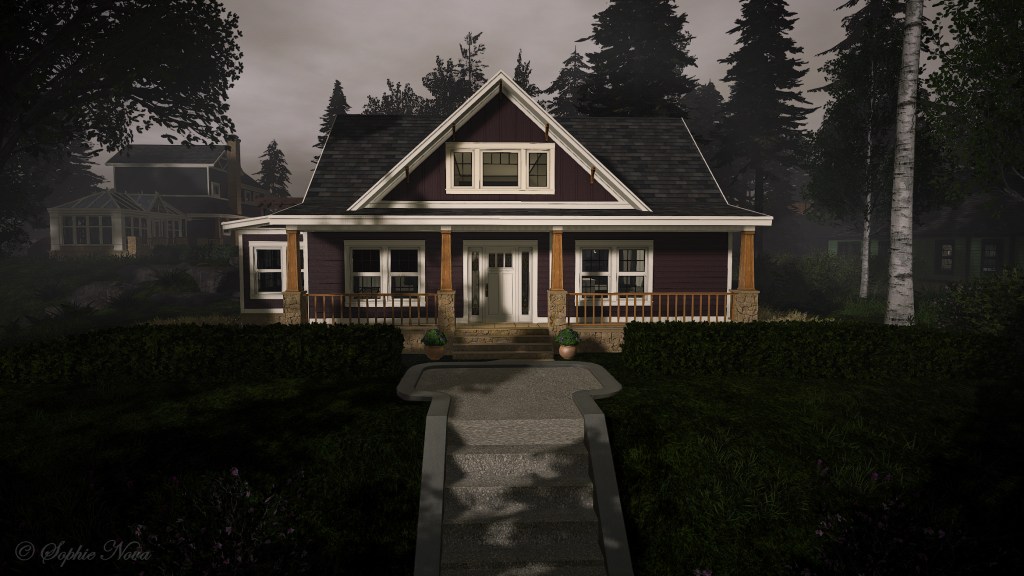


The Condition


Some agreements are made in good faith. Some are made because hope is the only currency you have left.

from Chapter 13.


The conversation happened at Thanksgiving because my mother was visiting.

That detail matters more than it might seem. He had a problem with my mother. She had a problem with him. Neither of them was overt about it — they simply moved around each other carefully, two people who understood exactly what the other represented. He resented her presence. He resented what she gave me — gifts, flowers, the ordinary gestures of a mother marking her daughter’s occasions. That generosity enraged him in ways I spent years trying to understand and eventually stopped trying.

He seemed unable to tolerate anyone giving me something that existed outside his control.

My mother’s visit clarified what had been forming for months. He said we were not working. I agreed. I told him we both needed to find our own places by the end of the year. And for a moment — brief, almost peaceful — that felt like a decision we had made together. A recognition of something we had both known for a long time.

Then I found the house.

It was within my budget. It had space for my sons. It had the particular quality of a place that could become something — rooms that held potential, a yard, the feeling of permanence I had been craving since Phoenix. I made an offer before I fully thought through what it meant.

He saw it and wanted to stay together.

The condition I set was simple. He needed to find a job — not for me, but for himself. To have something that was his. To stop depending on me and his mother to sustain his life while he waited for SL to become the career he believed it would be.

I told him plainly: I cannot keep carrying this. If we are going to try again, you have to carry something too.

He agreed.

I helped him complete the Walmart application. He could not get through the questionnaire alone, so I sat with him and we worked through it together — one more act of labor I offered without naming it as such. He got the job. He was happy for exactly one week.

Then came the complaints. The hours. The people. The particular indignity of a man who believed he was meant for more, standing behind a register while his creativity went unused.

Then came the reframe, delivered with the precision I had come to recognize:

I had forced him into this.

What I had done out of care became evidence of control.

I recognized the pattern.

I stayed anyway.

The house did not stabilize us. It simply gave the instability an address.

He was off and on through that year. He would leave after fights — sometimes I asked him to go, sometimes the fight made the decision for us — and then he would return. The returns varied. Sometimes remorse. Sometimes simply the resumption of presence, as though absence had been a pause rather than a statement. Each return required recalibration. Each departure left residue.

The cycle was familiar. I had lived inside it for years.

What was different now was the house. What had once existed across screens and distance now had walls and a mortgage and my children’s bedrooms down the hall.

There was nowhere to log off.

My oldest son told me once — quietly, not as accusation but as observation — that I was never happy.

It landed like a fist.

Not because he was wrong. Because he was right. And because he had been watching long enough to know it before I could admit it myself.

I was never happy.

Not in that house. Not that year. Not in the way a person is happy when their life belongs to them.

What I had done was adapt. What he called it was betrayal.


What I Built

Photo Note: A render from 2010. By then, much of what people associated with his name already carried my fingerprints.


Some things begin as care and become invisible over time.

from Chapter 11.


I gave him space before I gave him anything else.

That is the part that becomes difficult to remember later — that it did not begin as sacrifice. It began as care. I had land in Second Life, prims to spare, enough room to build something if someone needed a place to begin. And he did.

He had the kind of talent that unsettles you a little when you first encounter it. Not polished talent. Not the kind the world rewards easily. Something rougher than that. Something instinctive. He could build things that felt like they had lived somewhere before they arrived on a screen — dark cathedrals, fractured machinery, pieces that carried atmosphere inside them.

I understood that kind of creativity immediately because I had spent years around people who carried entire worlds inside themselves and nowhere stable to place them.

So I made room for him.

The Listener had been softness — romance, fantasy, warmth carefully arranged into beauty. The Counterpart was different from the beginning. Darker. Industrial. Sharp-edged. His world was metal and shadows and neon and ruin. Vampiric things. Cyberpunk things. Places that looked abandoned and alive at the same time.

I was drawn to the contrast as much as the person.

The first sets were mine.

Small things, carefully made — silks and caps built from techniques I had spent time developing myself. Tiny prim work. Delicate alignment. The sort of detail most people never notice unless they have built something by hand before.

He took what I made and extended it.

Veils. Variations. Additional pieces that grew outward from the foundation already there. That was how we actually began creatively — not by building the same thing together from the start, but by him stepping into something I had already created and expanding it outward into his own vision.

Later, the work became more intertwined.

He imagined quickly. I refined patiently.

He would rough out the structure of an idea, texture something half-finished at three in the morning, build the atmosphere of it. I would take what he made and finish the parts no one notices until they are missing — the alignments, the scripts, the permissions, the packaging, the notecards, the listings, the advertisements, the marketplace updates after I had already worked a full day somewhere else.

He made the vision feel alive. I made the vision function.

At the time, neither of us said the distinction aloud.

We built the storefront together. Dark stone. Cathedral scale. Purple light spilling across black floors. A portal suspended above the entrance like something opening.

In the beginning, we was still an honest word.

There was excitement in it then. The particular intimacy of building something alongside someone you loved. Long nights working while music played in the background. Conversations folded between textures and scripts and half-finished ideas. The feeling that the two of you were creating not just objects, but a world.

At some point — not dramatically, not on a day I could name — the we quietly became me.

The store became a second job. His creative timeline became my deadline. If I came home exhausted and did not want to log in after work, it became part of the reason things were not succeeding the way they should. His vision remained the center of gravity. My role became sustaining it.

I do not think he saw it that way. I think, genuinely, he believed he was the one sacrificing more. My work existed in his mind differently. I was supporting the household because I had to. He was creating because it mattered.

The contradiction inside that belief never fully reached him.

In his SL profile, he described me as artist, gamer, creator, scripter, sim builder, and co-owner of the store. He saw what I was. He named it publicly, in his own words, in the space where he chose what to say about himself and the people in his life.

He knew I built things. He said so. He simply made sure the things I built carried his name.

That is not oversight. That is a choice.

I kept building anyway.

Through the Wisconsin years, through the financial architecture of a household I carried alone, through the arguments and the cycles and the moments that required swallowing — I kept making things. Collections named for goddesses, built by hand, listed under my own name on my own marketplace page. The dates are still there, stretching back through all of it.

I was making things the whole time.

That is the part of the story that belongs to me and cannot be revised. Whatever else was happening — whatever was being called mine that wasn’t, whatever of mine was being called his — I was creating. Quietly. Continuously. Under my own name.

By the time people knew the store by his name, my hands were already in its foundations.

The store that carries my name still remains.

I built both of them.